Trending

Rice pudding and tapioca pudding share a chapter in most dessert books, and cooks often treat them as interchangeable. They are not. One is built on grains, the other on starch pearls, and that single difference decides how the pudding thickens, how it feels on the spoon, how it holds overnight, and what belongs on top. Here is how the two really compare, and how to cook each one well.
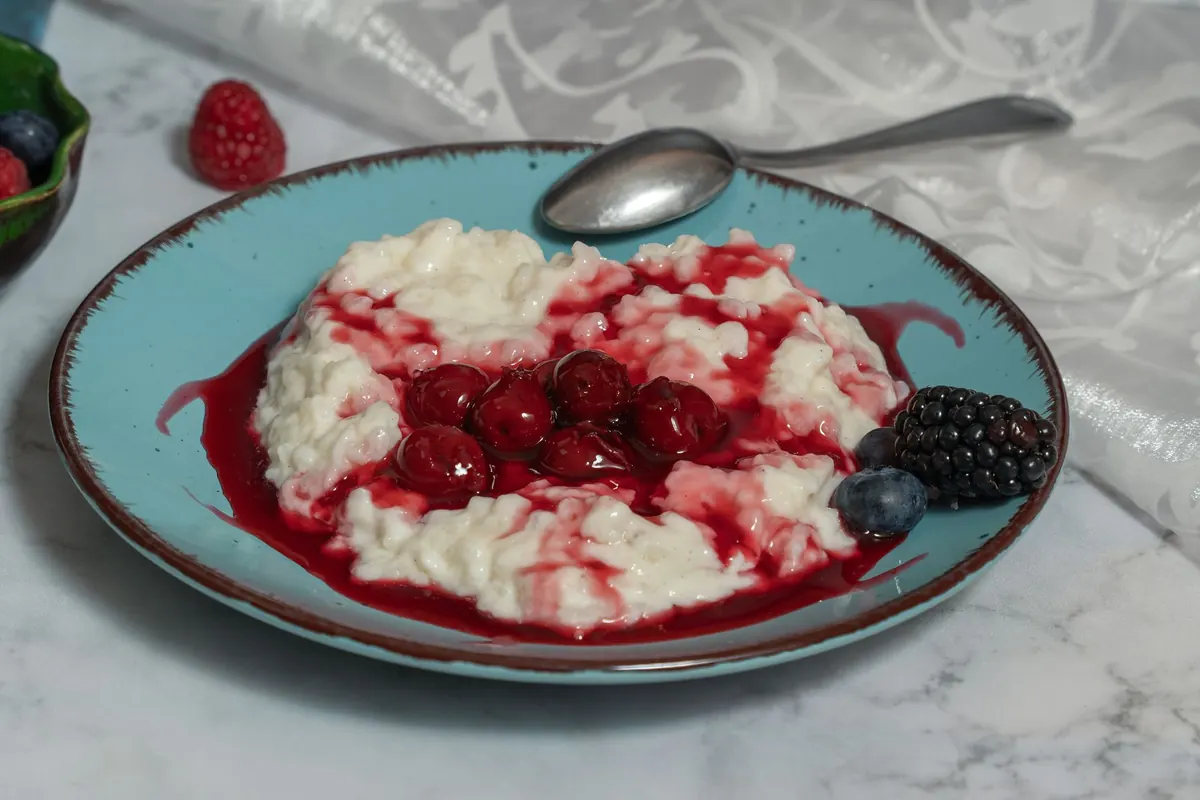
Rice pudding starts with short or medium-grain rice — Arborio, sushi rice, or plain short-grain — simmered in milk until the grains soften and give up their starch. That starch is fine-grained and sets into something soft and slightly loose. The grains themselves stay visible. Even after an hour on the stove, you can still see individual kernels, plump and yielding, suspended in a creamy base.
Tapioca pudding comes from cassava root starch, sold as pearls, flakes, or flour. Tapioca starch is almost entirely amylopectin, which is why it turns glossy, stretchy, and a little elastic as it cooks. Small pearls soften into clear beads with a gentle chew; large pearls need patience and turn into something closer to jelly. Where rice pudding is grainy in the best way, tapioca pudding is smooth and bouncy. Neither is better. They simply do different jobs.
Temperature changes both, but not in the same way. Rice pudding thickens noticeably as it cools and turns almost sliceable in the fridge. Tapioca sets into a firm gel that relaxes again the moment you stir it.
Both are milk, sugar, starch, and something to perfume it. The order and the heat are where they part ways.
The stovetop version is the most reliable. Use a heavy pot, a ratio of roughly half a cup of short-grain rice to four cups of whole milk, and keep the heat at the lowest simmer you can manage. Stir every few minutes with a heatproof spatula, scraping the bottom corners where scorching starts. Expect 45 to 60 minutes. Sugar goes in toward the end, because added early it slows the rice from softening. A pinch of salt at the start, vanilla off the heat.
For the baked style, which gives you a firmer set and that browned top:
Small pearls need 30 minutes in cold water or milk; large pearls want several hours or overnight. Skip the soak and you will get hard centers no matter how long you simmer.
Instant or "minute" tapioca skips the soak entirely and thickens in about 15 minutes, though the pearls are smaller and softer.
Scorched rice pudding. Almost always a heat problem, not a recipe problem. Drop the flame, switch to a heavier pot, and stir in a figure-eight motion that scrapes the base. Once you smell toasted milk, the whole batch tastes like it.
Tapioca that turned to glue. Too much starch, too much heat, or both. Thin it with hot milk rather than cold, a few tablespoons at a time, and fold gently. Cold liquid will seize the gel and make it lumpy.
Pudding that seems sweet enough hot and flat when cold. Chill dulls sweetness. Taste again after cooling and adjust with a little sugar, a pinch of salt, or a squeeze of lemon before you serve.
Skin on top. A skin is fine on baked rice pudding and unwelcome on tapioca. Press plastic wrap directly onto the surface while it cools and you will not get one.
Rice pudding takes warm spice and dark, caramelized flavors. Tapioca takes bright fruit and anything that cuts sweetness.
Serve rice pudding warm in shallow bowls, with the toppings added at the table so nothing goes soggy. Serve tapioca cold in small glasses or ramekins, layered with fruit if you like. Both keep well covered in the refrigerator; egg-based versions should be chilled promptly and eaten within three to four days.
Make rice pudding when you want something homey and forgiving — the kind of dessert that improves with a slow afternoon and a heavy pot. Make tapioca when you want contrast: cool, glossy, lightly chewy, with fruit that keeps it from turning heavy.
For a crowd, rice pudding scales up easily in a Dutch oven or slow cooker. For a dinner party you can assemble ahead, tapioca holds its texture better overnight. And whichever you choose, taste it cold before you commit to the sweetness. That last spoonful, not the first, is the one your guests will remember.
Photo: Gundula Vogel / Pexels